
Pender County Obituary Records and Death Certificates
Searching for obituary records in Pender County, North Carolina starts with the Register of Deeds in Burgaw. Death certificates have been filed with the county since 1913, and a range of historical sources extends the record back further for genealogy researchers. Pender County sits in southeastern North Carolina, a region shaped by farming, timber, and coastal communities. Whether you need a certified death certificate or historical newspaper obituaries from Burgaw and surrounding towns, this guide covers the key resources and how to use them.
Pender County Quick Facts
Pender County Register of Deeds - Death Records and Obituary Access
The Pender County Register of Deeds in Burgaw is the primary source for official death certificates in the county. Records are maintained under North Carolina General Statute 130A-93, which requires death certificates to be filed with the local registrar following each reported death. The Register of Deeds holds these documents and provides certified copies to qualifying individuals.
Certified copies cost $10 each. Researchers submitting requests should include the full name of the deceased, the approximate date of death, and documentation establishing their right to access the record under NCGS 130A-93.1. Requests can be made in person at the Burgaw office or submitted by mail.
The NCGenWeb project hosts a Pender County genealogy page with transcribed records, cemetery indexes, and links to historical sources at ncgenweb.us/pender. This free resource is a practical first stop for anyone beginning Pender County obituary research.
| Office |
Pender County Register of Deeds 300 East Fremont Street Burgaw, NC 28425 Phone: (910) 259-1225 |
|---|---|
| Hours | Monday through Friday, 8:00 AM to 5:00 PM |
| Records Begin | Death certificates from 1913; historical records through alternative sources |
| Certified Copies | $10.00 each |
The NCGenWeb Pender County page offers free access to transcribed records and historical genealogy materials that supplement the official death certificate collection.
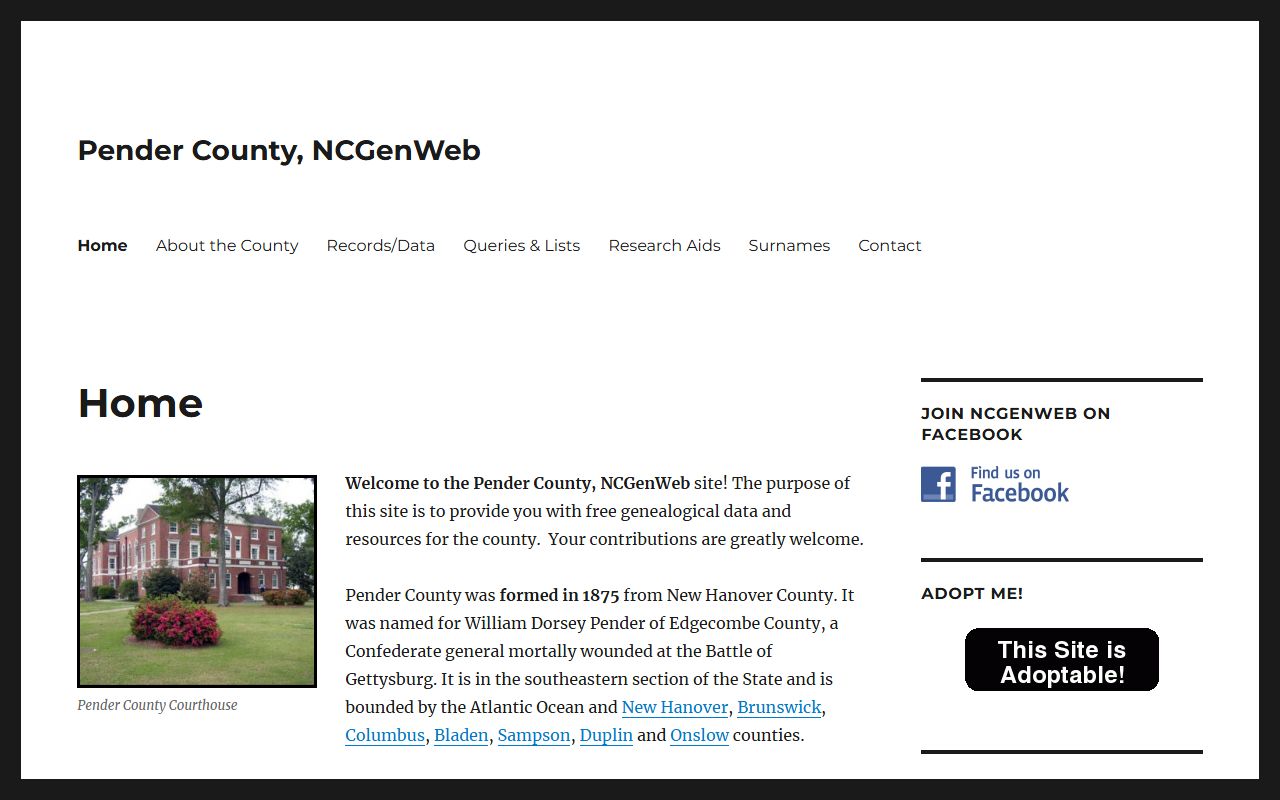
The NCGenWeb Pender County resource at ncgenweb.us includes cemetery surveys, record transcriptions, and links to historical Pender County obituary materials.
About Pender County, North Carolina
Pender County was established in 1875 from New Hanover County. It was named for William Dorsey Pender, a Confederate general from North Carolina who was killed at the Battle of Gettysburg in 1863. The county seat of Burgaw is a small inland town that serves as the administrative center for this largely rural county.
Southeastern North Carolina's landscape shaped Pender County's communities. Pine forests, tobacco farms, and river corridors defined the economy through the nineteenth and early twentieth centuries. Several small communities throughout the county maintained their own churches, cemeteries, and local newspapers, all of which serve as genealogical resources today.
Because Pender County was formed from New Hanover County in 1875, researchers looking for Pender County deaths before that date should consult New Hanover County records. The New Hanover County Register of Deeds in Wilmington holds historical documents for the broader region, and the New Hanover County Public Library's North Carolina Room maintains an extensive genealogy collection covering both counties.
Note: Pre-1875 Pender County deaths fall under New Hanover County jurisdiction. Researchers should check New Hanover County records and the Wilmington newspaper archives for deaths occurring before Pender County's formation.
Pender County Obituary Research - Libraries and Genealogy Collections
The Pender County Public Library in Burgaw holds a local history collection that includes newspaper clippings, family files, and genealogy materials. Historical issues of the Pender Chronicle and other regional papers carried death notices and obituaries for residents of Burgaw, Surf City, Hampstead, and surrounding communities. Library staff can assist researchers in locating relevant newspaper issues and microfilm.
The Cape Fear Museum of History and Science in Wilmington also holds materials relevant to Pender County history. Because Pender County was carved from New Hanover County, Wilmington-area institutions often hold records that cross into Pender County's historical territory. A visit to both Burgaw and Wilmington repositories is often worthwhile for serious genealogical work.
DigitalNC at digitalnc.org has digitized newspapers from across southeastern North Carolina. Researchers can search these collections for Pender County death notices by name. Coverage varies by publication and decade, but the database is freely accessible and provides useful leads for obituary research spanning the late nineteenth and early twentieth centuries.
The NC State Archives at archives.ncdcr.gov holds county court records, estate files, and other documents that can confirm deaths occurring in Pender County before 1913. Estate proceedings and probate records in particular often provide death dates, surviving family members, and property details that parallel the information found in modern death certificates.
How to Search Pender County Obituary and Death Records
Start by identifying the approximate time period of the death you are researching. This determines which sources are most relevant.
Deaths from 1913 onward are documented in official death certificates held by the Pender County Register of Deeds and duplicated at the NC Vital Records office in Raleigh. The NC Vital Records office at vitalrecords.nc.gov accepts requests by mail and through authorized vendors. Both the county and state offices can provide certified copies, and the fees and processing times may differ between them.
For deaths before 1913, the best sources are newspaper archives from Burgaw and Wilmington, church burial registers, cemetery records, and county court documents held at the NC State Archives. The NCGenWeb Pender County page at ncgenweb.us/pender is a practical starting point for pre-1913 research.
Useful resources for Pender County obituary research include:
- Pender County Register of Deeds for certified death certificates from 1913
- NC Vital Records for statewide certified copies and online requests
- NCGenWeb Pender County page for transcribed records and historical links
- Pender County Public Library for local history files and newspaper microfilm
- DigitalNC for digitized southeastern North Carolina newspaper archives
- NC State Archives for probate files, court records, and pre-1913 sources
- New Hanover County records for deaths before Pender County's 1875 formation
Newspaper obituaries from the Pender Chronicle and Wilmington papers add context that death certificates often lack. Family relationships, church memberships, and burial locations regularly appear in newspaper notices but not in official records. Cross-referencing both sources provides the most complete picture of a Pender County death.
North Carolina Vital Records - Pender County Obituary Certificates
The North Carolina Department of Health and Human Services operates the NC Vital Records office in Raleigh. This office maintains statewide copies of all death certificates filed in North Carolina since 1913, including those from Pender County. Researchers who cannot visit Burgaw in person can request certified copies directly from the state office.
Processing times at NC Vital Records vary by request volume. The office accepts payment by check, money order, or credit card for mail and online requests. NCGS 130A-93 governs the legal framework for maintaining and releasing these statewide death records. Reviewing the NC Vital Records website for current fee schedules and processing times before submitting a request is recommended.
The NC Digital Collections portal at digital.ncdcr.gov also provides online access to selected historical state records. Some digitized death-related documents from Pender County and southeastern North Carolina are available through this portal without a fee.
Nearby Counties
These counties border Pender County. Checking adjacent county records can help when the exact location of a death is uncertain.